

How to Conserve and Store Sea Moss
How to Conserve and Store Sea Moss
Sea moss is celebrated for being a nutrient-dense natural superfood packed with minerals, vitamins, and trace elements that support wellness. But because it’s a natural, minimally processed supplement, how you store it makes a big difference when you make it into a gel. Done right, you can preserve its freshness, maintain its nutrient value, and save money by extending its usable life. Below is your complete guide to storing sea moss (raw, dried, or gel) for maximum longevity and safety.

Table of Contents
- Why Proper Storage Matters
- Sea Moss Forms & Shelf Life
- How to Store Sea Moss Properly
- How to Know if your Sea Moss has Gone Bad
- How this Helps you Save Money
- Storage Cheat Sheet
- Final Thoughts
1. Why Proper Storage Matters
- Sea moss, especially when turned into gel, contains moisture which makes it susceptible to spoilage if mishandled.
- Proper storage helps preserve texture, aroma, and nutrient integrity; but also helps prevent mold, bacterial growth, or degradation that reduce safety or effectiveness.
- By storing your sea moss gel correctly, you also minimize waste and maximize the value of each purchase.
2. Sea Moss Forms & Shelf Life
|
Form |
Description & Use |
Typical Shelf Life (Best Storage) |
|
Dried / Raw Sea Moss |
Sea moss that has been cleaned, air-dried, moisture minimized |
12-18 months in a cool, dry, dark storage. |
|
Fresh / Raw (Soaked but not processed) |
Recently harvested or hydrated moss not yet dried or turned to gel |
Only a few days to a couple weeks, depending on freshness and refrigeration. Best to blend into a gel for longer shelf life. |
|
Sea Moss Gel (homemade or prepared) |
Sea moss soaked and blended with water to create a gel used in smoothies, recipes, skincare, etc. |
2-4 weeks when refrigerated properly. ~6 months if frozen under ideal conditions (airtight container/freezer-safe). |
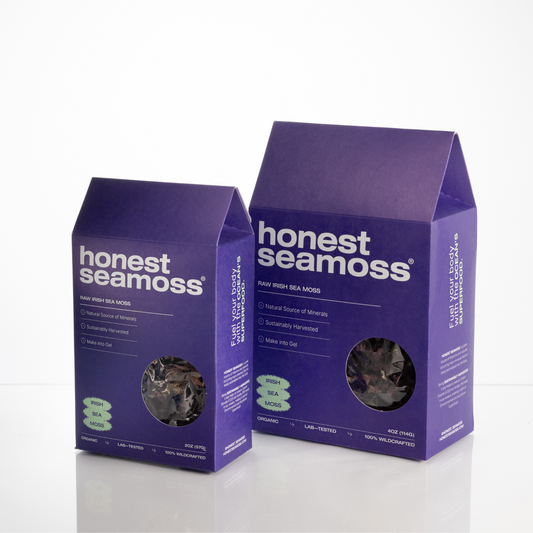
Dried sea moss is the most shelf-stable, ideal for long-term storage. Sea Moss Gel is made to be consumed as the most bioavailable method of including Sea Moss into your routine.
3. How to Store Sea Moss Properly

For Dried Sea Moss:
- Store in a cool, dry, dark place (pantry or cupboard), away from direct sunlight or humidity until ready to be transformed into a gel.
- Keep in an airtight container or sealed bag to avoid moisture absorption and mold growth.
- If you buy in bulk, follow a first-in, first-out rotation. Use older stock before newer to ensure quality.
For Sea Moss Gel:
- Refrigerate immediately after making (or receiving). Store at about 4 °C (≈ 39 °F), ideally in the back of the fridge where temperature is most stable.
- Use airtight glass containers (glass is preferable over plastic) to reduce contamination risk and avoid flavor absorption.
- Use clean utensils each time; no double-dipping or finger contact. This helps prevent bacterial growth and extends shelf life.
- If you want to store gel long-term: freeze it. Portion into small jars or ice-cube trays (leave room for expansion), then store in freezer-safe containers. Label with date. Frozen gel can last ~6 months.
4. How to Know If Your Sea Moss Has Gone Bad
Even with proper storage, sea moss (especially gel) will eventually degrade. Here are key red flags:

- Off smell: A strong sour, fishy, or otherwise unpleasant odor- instead of the mild “sea-like” scent- often signals spoilage.
- Color or texture changes: Dark spots, overly watery/slimy consistency, or clumping are signs the product may be spoiling.
- Mold growth: Any visible mold (green, black, fuzzy, dusty) means you should discard immediately.
- Unpleasant taste: If gel tastes bitter, rancid, or “off,” don’t consume it. Fresh sea moss gel should taste neutral or very mild with a slight “fishiness” to it.
When in doubt, toss it. Because sea moss gel is perishable and doesn’t always contain preservatives, it behaves more like fresh food than a long-lasting supplement. This is why we highly recommend freezing any gel you may not use within the first couple of weeks.
5. How This Helps You Save Money
- Buy dry sea moss in bulk (when on sale), store properly, and you’ll have a long-lasting supply. Turning it into gel as needed reduces waste and gives flexibility.
- Make gel yourself: homemade batches stored right can give you weeks of supply, and freezing extends that to months. That beats frequently buying small jars, which tend to be much pricier per ounce.
- Portion control via freezing (e.g. ice-cube trays) helps you avoid waste, use only what you need, and prevent spoilage.
- Be vigilant before use: Checking smell, color, texture helps you avoid spoiled batches; protecting your health and avoiding waste.
6. Storage Cheat Sheet

- Dried Sea Moss: Airtight, cool, dry, dark place → 6–12 months
- Sea Moss Gel (Fridge): Airtight container, back of fridge → ~2–3 weeks
- Sea Moss Gel (Freezer): Portion/ice-cube + freezer-safe container → ~6 months
- At Each Use: Use clean utensils; smell, look, and taste check; discard at first sign of spoilage
7. Final Thoughts
Sea moss is a versatile, nutrient-rich superfood; but to get the most out of it, proper storage is essential. Dried moss gives you long shelf life and flexibility. Gel offers convenience and ease of use, as long as you treat it like a perishable, high-moisture food: refrigerate or freeze, keep it sealed, and use clean utensils.
By following the steps above, you can stretch every batch, avoid waste, and build a reliable, cost-effective sea moss routine that fits your lifestyle and budget.